These are books on writing craft and business that helped me a lot when I first started writing, so many of these are rather old. I haven't read all the different writing books out there, and I haven't read many of the newer writing books, so this list isn't comprehensive, it's just a list of the books that helped me the most. (Updated 11/21/2019)
 Techniques of the Selling Writer by Dwight V. Swain
This book helped me understand the principles of solid plotlines and scenes that hook the reader to the end. He’s a bit long-winded at times, but easy to read. It’s a classic, and can probably be found in your local library or through inter-library loan, and it's now also available as an ebook. I also wrote a series of articles based on Swain’s book.
Amazon / Kobo
 Scene and Structure by Jack Bickham
This is almost all the same stuff as in Techniques of the Selling Writer, but written in a different style that's a bit easier to read than Swain.
Amazon / Apple Books/ Kobo
 Plot and Structure by James Scott Bell
This is a terrific, more modern alternative to Swain’s book. Bell lays out the basics of solid novel structure that can be used by Pantsers or Plotters. Very easy to read with useful exercises.
Amazon / Apple Books/ Kobo
 Stein on Writing by Sol Stein
Some people find Swain difficult to read, and many writers suggest Stein’s book as a good alternative. They both cover the basics of good, solid writing.
Amazon / Apple Books/ Kobo
 Goal, Motivation and Conflict by Debra Dixon
This is the classic book on characterization. Many times, when I was judging writing contest entries, if there was a characterization problem, it had to do with lack of external or internal goals, believable motivation, and/or sufficient conflict to carry the story.
Amazon / Apple Books / Kobo
 Getting into Character: Seven Secrets a Novelist Can Learn from Actors by Brandilyn Collins
I tend to find that the underlying values and traits of my characters drive the plotline. Brandilyn’s method is one of the most unique ways to create truly three-dimensional characters. It was amazing how this book helped me add more depth, believability, consistency and intriguing behavioral traits to my story people.
Amazon / Apple Books / Kobo
 45 Master Characters by Victoria Lynn Schmidt
This is another method for character development using mythic models as archetypes. This book also goes into both the Hero's Journey and the Heroine's Journey, which are different from each other. The Heroine's Journey, especially, was described in excellent detail. I found this book very useful for both bringing out the interesting extremes in my characters, and also for ideas on how to make them unique by turning the archetype on its head.
Amazon / Apple Books / Kobo
 Self-Editing for Fiction Writers by Renni Browne and Dave King
Writing today differs from when Jane Austen was accepted for publication, or even a few years ago when Nora Roberts was just starting her career. Editors look for certain technical aspects that separate the amateur from the professional. These techniques helped me tighten my writing and bring it to the next level. It especially helped that my critique partner also read this book, so I had two sets of eyes going through the same editing processes.
Amazon / Apple Books / Kobo
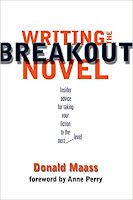 Writing the Breakout Novel by Donald Maass
This book really brought my writing to the next level. Maass focuses on the common essences of the breakout novels written, both past and contemporary. His principles applied to an outlined novel can kick it up a notch and add depth. I especially like the Writing the Breakout Novel Workbook , which has excellent exercises to help me draw the most conflict and interest out of my storyline and characters. Using the workbook is a lot like going to one of his all-day workshops.
Writing the Breakout Novel: Amazon / Apple Books / Kobo
Writing the Breakout Novel Workbook: Amazon
 Characters, Emotion and Viewpoint by Nancy Kress
This book was one of the most comprehensive I’ve seen on viewpoint. It shows how character and emotion are tightly woven together with viewpoint, and how a skillful understanding of all three concepts makes for great fiction. She goes into a lot of detail on different aspects of character and viewpoint, and the exercises at the end of each chapter are also useful.
Amazon / Apple Books / Kobo
 Writing for Emotional Impact: Advanced Dramatic Techniques to Attract, Engage, and Fascinate the Reader from Beginning to End by Karl Iglesias
This is a fantastic guide for a variety of writing topics. It’s meant for screenwriters, but his philosophy is that screenwriters need to write for readers first, since that’s the first gatekeeper to getting a script bought, so his principles are applicable to novelists as well. He has a good chapter on hook—what can make your book unique and original—and also one on theme that’s one of the best I’ve read yet.
Amazon / Apple Books
 Finding Your Writer's Voice by Thaisa Frank and Dorothy Wall
This book gave great exercises for developing my writer’s voice further. Not all the exercises resonated with me, but most of them were terrific to help me define and emphasize my voice more.
Amazon / Apple Books / Kobo
 Pen on Fire: A Busy Woman's Guide to Igniting the Writer Within by Barbara DeMarco-Barrett
This is one of the best books I've read on how to find both time and motivation to write, and it also has some fantastic writing exercises that you can do in fifteen minutes. This is a great book to read a chapter and jump-start your creativity or work through writer's block, and the short chapters are perfect for a busy writer to read during a short break or while waiting for something (or someone). I thoroughly enjoyed this book as a source of inspiration and encouragement.
Amazon
 The Writer’s Brainstorming Kit: Thinking in New Directions by Pam McCutcheon and Michael Waite
Based on Debra Dixon’s “Goal, Motivation, Conflict,” this book and card deck provide hundreds of ideas. Randomly chosen cards can then create innovative, unique characters or plotlines. This can also serve to jump-start creative avenues for enhancing cliché plot devices or suggesting depth to cardboard characters.
The ebook is available, but the card deck (and hardcover book) can only be ordered directly from Gryphon Books for Writers (http://www.gryphonbooksforwriters.com/, ISBN 0965437140)
In lieu of the card deck, you can also use a random number generator, since each of the sections is numbered (I actually lost my card deck recently so that's what I do when I'm fishing for ideas).
Amazon / Apple Books / Kobo
 2k to 10k: Writing Faster, Writing Better, and Writing More of What You Love by Rachel Aaron
This is a short but really useful book that helped me realize the potential of my writing speed. I like listening to the audiobook on my walks to inspire me.
Amazon / Apple Books / Kobo
 The Writing Productivity Bundle: Write Better, Faster, The 8-Minute Writing Habit, and Dictate Your Book (Growth Hacking For Storytellers) by Monica Leonelle
This is actually 3 books, all of which I really enjoy:
Write Better, Faster: I really enjoyed reading this book on the author’s writing process. Her diary can be a bit tedious, but it’s because it’s all out there, warts and all. I especially liked how she broke down her process of outlining, beats (what I call blocking), sketching, and then rough draft. I realized that her “beats” is what Rachel Aaron talked about when she wrote about detailing a scene before writing it, and this helped me massively improve my writing speed when I started doing this.
The 8-Minute Writing Habit: This was especially helpful for me when I was suffering from a series of writer’s blocks, because it reminded me that just 8 minutes is manageable but a huge boost to my self-confidence.
Dictate Your Book: I actually found this Writing Productivity Bundle because I was searching on Amazon for this book. I had gotten fed up with babying my wrist and was looking into seriously getting into dictation, but actually hearing my voice and trying to write by speaking was horrible for me. I wanted some books on tips and tricks and picked up the Writing Productivity Bundle because it included this book. I especially liked how she made a huge effort to rig her dictation equipment to match her writing system.
Writing Productivity Bundle: Amazon
Write Better, Faster: Amazon
The 8-Minute Writing Habit: Amazon
Dictate Your Book: Amazon
 Fiction Unboxed: Publishing and Writing a Novel in 30 Days, From Scratch, In Front of the World by Johnny Truant, Sean M. Platt, David Wright
A book only about the writing process, not about how to write. It reads like a biography but they do condense what they learned at the end of each chapter.
Amazon
- Techniques of the Selling Writer by Dwight Swain
- Scene and Structure by Jack Bickham
- Plot and Structure by James Scott Bell
- Stein on Writing by Sol Stein
- Goal, Motivation and Conflict by Debra Dixon
- Getting into Character: Seven Secrets a Novelist Can Learn from Actors by Brandilyn Collins
- 45 Master Characters by Victoria Lynn Schmidt
- Self-Editing for Fiction Writers by Renni Browne and Dave King
- Writing the Breakout Novel by Donald Maass
- Characters, Emotion and Viewpoint by Nancy Kress
- Writing for Emotional Impact: Advanced Dramatic Techniques to Attract, Engage, and Fascinate the Reader from Beginning to End by Karl Iglesias
- Finding Your Writer's Voice by Thaisa Frank and Dorothy Wall
- Pen on Fire: A Busy Woman's Guide to Igniting the Writer Within by Barbara DeMarco-Barrett
- The Writer’s Brainstorming Kit: Thinking in New Directions by Pam McCutcheon and Michael Waite
- 2k to 10k by Rachel Aaron
- The Writing Productivity Bundle: Write Better, Faster, The 8-Minute Writing Habit, and Dictate Your Book by Monica Leonelle
- Fiction Unboxed by Johnny Truant, Sean M. Platt, David Wright
This book helped me understand the principles of solid plotlines and scenes that hook the reader to the end. He’s a bit long-winded at times, but easy to read. It’s a classic, and can probably be found in your local library or through inter-library loan, and it's now also available as an ebook. I also wrote a series of articles based on Swain’s book.
Amazon
 / Kobo
This is almost all the same stuff as in Techniques of the Selling Writer, but written in a different style that's a bit easier to read than Swain.
Amazon
 / Apple Books/ Kobo
This is a terrific, more modern alternative to Swain’s book. Bell lays out the basics of solid novel structure that can be used by Pantsers or Plotters. Very easy to read with useful exercises.
Amazon
 / Apple Books/ Kobo
Some people find Swain difficult to read, and many writers suggest Stein’s book as a good alternative. They both cover the basics of good, solid writing.
Amazon
 / Apple Books/ Kobo
This is the classic book on characterization. Many times, when I was judging writing contest entries, if there was a characterization problem, it had to do with lack of external or internal goals, believable motivation, and/or sufficient conflict to carry the story.
Amazon
 / Apple Books / Kobo
I tend to find that the underlying values and traits of my characters drive the plotline. Brandilyn’s method is one of the most unique ways to create truly three-dimensional characters. It was amazing how this book helped me add more depth, believability, consistency and intriguing behavioral traits to my story people.
Amazon
 / Apple Books / Kobo
This is another method for character development using mythic models as archetypes. This book also goes into both the Hero's Journey and the Heroine's Journey, which are different from each other. The Heroine's Journey, especially, was described in excellent detail. I found this book very useful for both bringing out the interesting extremes in my characters, and also for ideas on how to make them unique by turning the archetype on its head.
Amazon
 / Apple Books / Kobo
Writing today differs from when Jane Austen was accepted for publication, or even a few years ago when Nora Roberts was just starting her career. Editors look for certain technical aspects that separate the amateur from the professional. These techniques helped me tighten my writing and bring it to the next level. It especially helped that my critique partner also read this book, so I had two sets of eyes going through the same editing processes.
Amazon
 / Apple Books / Kobo
This book really brought my writing to the next level. Maass focuses on the common essences of the breakout novels written, both past and contemporary. His principles applied to an outlined novel can kick it up a notch and add depth. I especially like the Writing the Breakout Novel Workbook
, which has excellent exercises to help me draw the most conflict and interest out of my storyline and characters. Using the workbook is a lot like going to one of his all-day workshops.Writing the Breakout Novel: Amazon
 / Apple Books / Kobo
Writing the Breakout Novel Workbook: Amazon

This book was one of the most comprehensive I’ve seen on viewpoint. It shows how character and emotion are tightly woven together with viewpoint, and how a skillful understanding of all three concepts makes for great fiction. She goes into a lot of detail on different aspects of character and viewpoint, and the exercises at the end of each chapter are also useful.
Amazon
 / Apple Books / Kobo
This is a fantastic guide for a variety of writing topics. It’s meant for screenwriters, but his philosophy is that screenwriters need to write for readers first, since that’s the first gatekeeper to getting a script bought, so his principles are applicable to novelists as well. He has a good chapter on hook—what can make your book unique and original—and also one on theme that’s one of the best I’ve read yet.
Amazon
 / Apple Books
This book gave great exercises for developing my writer’s voice further. Not all the exercises resonated with me, but most of them were terrific to help me define and emphasize my voice more.
Amazon
 / Apple Books / Kobo
This is one of the best books I've read on how to find both time and motivation to write, and it also has some fantastic writing exercises that you can do in fifteen minutes. This is a great book to read a chapter and jump-start your creativity or work through writer's block, and the short chapters are perfect for a busy writer to read during a short break or while waiting for something (or someone). I thoroughly enjoyed this book as a source of inspiration and encouragement.
Amazon

Based on Debra Dixon’s “Goal, Motivation, Conflict,” this book and card deck provide hundreds of ideas. Randomly chosen cards can then create innovative, unique characters or plotlines. This can also serve to jump-start creative avenues for enhancing cliché plot devices or suggesting depth to cardboard characters.
The ebook is available, but the card deck (and hardcover book) can only be ordered directly from Gryphon Books for Writers (http://www.gryphonbooksforwriters.com/, ISBN 0965437140)
In lieu of the card deck, you can also use a random number generator, since each of the sections is numbered (I actually lost my card deck recently so that's what I do when I'm fishing for ideas).
Amazon
 / Apple Books / Kobo
This is a short but really useful book that helped me realize the potential of my writing speed. I like listening to the audiobook
 on my walks to inspire me.
Amazon
 / Apple Books / Kobo
This is actually 3 books, all of which I really enjoy:
Write Better, Faster: I really enjoyed reading this book on the author’s writing process. Her diary can be a bit tedious, but it’s because it’s all out there, warts and all. I especially liked how she broke down her process of outlining, beats (what I call blocking), sketching, and then rough draft. I realized that her “beats” is what Rachel Aaron talked about when she wrote about detailing a scene before writing it, and this helped me massively improve my writing speed when I started doing this.
The 8-Minute Writing Habit: This was especially helpful for me when I was suffering from a series of writer’s blocks, because it reminded me that just 8 minutes is manageable but a huge boost to my self-confidence.
Dictate Your Book: I actually found this Writing Productivity Bundle because I was searching on Amazon for this book. I had gotten fed up with babying my wrist and was looking into seriously getting into dictation, but actually hearing my voice and trying to write by speaking was horrible for me. I wanted some books on tips and tricks and picked up the Writing Productivity Bundle because it included this book. I especially liked how she made a huge effort to rig her dictation equipment to match her writing system.
Writing Productivity Bundle: Amazon

Write Better, Faster: Amazon

The 8-Minute Writing Habit: Amazon

Dictate Your Book: Amazon

A book only about the writing process, not about how to write. It reads like a biography but they do condense what they learned at the end of each chapter.
Amazon

Comments
Post a Comment